




Space Weather & Cosmic Radar
Live tracking of solar weather, cosmic events, and asteroids passing near Earth today.
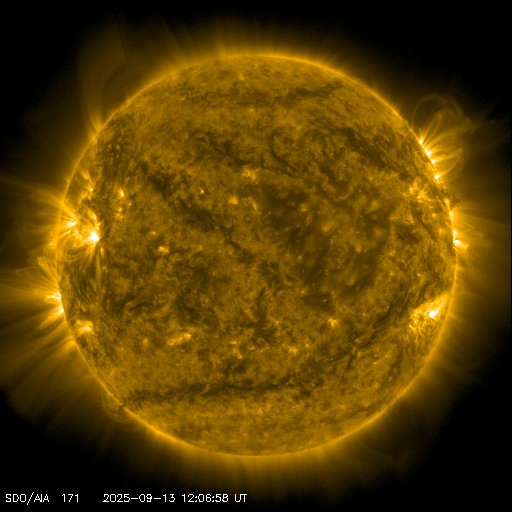
Solar Wind Speed
Solar Flares
Geomagnetic Activity (Kp Index)
Planetary K-index over the last 3 days
Tonight's Highlights
Special celestial events happening soon
Asteroids Approaching Today (NEO Radar)
Understanding the Space Weather Dashboard
Our Space Weather dashboard aggregates real-time data from NASA and NOAA to give you an immediate overview of the conditions in our solar system. But what exactly do these metrics mean?
1. Solar Wind Speed and Density
The Sun constantly emits a stream of charged particles known as the solar wind. Under normal conditions, this wind travels at about 400 km/s. However, during a solar event like a Coronal Mass Ejection (CME), this speed can jump to over 800 km/s. When high-speed, dense solar wind hits Earth's magnetic field, it can trigger geomagnetic storms.
2. Solar Flares (C-Class, M-Class, X-Class)
Solar flares are intense bursts of radiation. We classify them by their strength:A and B (background levels), C (minor), M (moderate, can cause brief radio blackouts), and X (extreme, can cause planet-wide radio blackouts and long-lasting radiation storms).
3. The Kp-Index (Geomagnetic Activity)
The Kp-index is a scale used to characterize the magnitude of geomagnetic storms. It ranges from 0 to 9. A Kp-index between 0 and 4 indicates quiet or unsettled magnetic conditions. A Kp-index of 5 or higher indicates a geomagnetic storm. If the Kp-index reaches 7, 8, or 9, you have a high chance of seeing the Northern or Southern Lights (Auroras) at much lower latitudes than usual!
4. Near-Earth Objects (Asteroid Tracker)
Using the NASA Near Earth Object Web Service (NeoWs), we track asteroids and comets that pass close to Earth's orbit. An object is flagged as "Potentially Hazardous" if it comes closer than 0.05 Astronomical Units (about 7.5 million kilometers) and has an estimated diameter greater than 140 meters. Don't worry—space is vast, and "close" in astronomical terms is still extremely far away!